
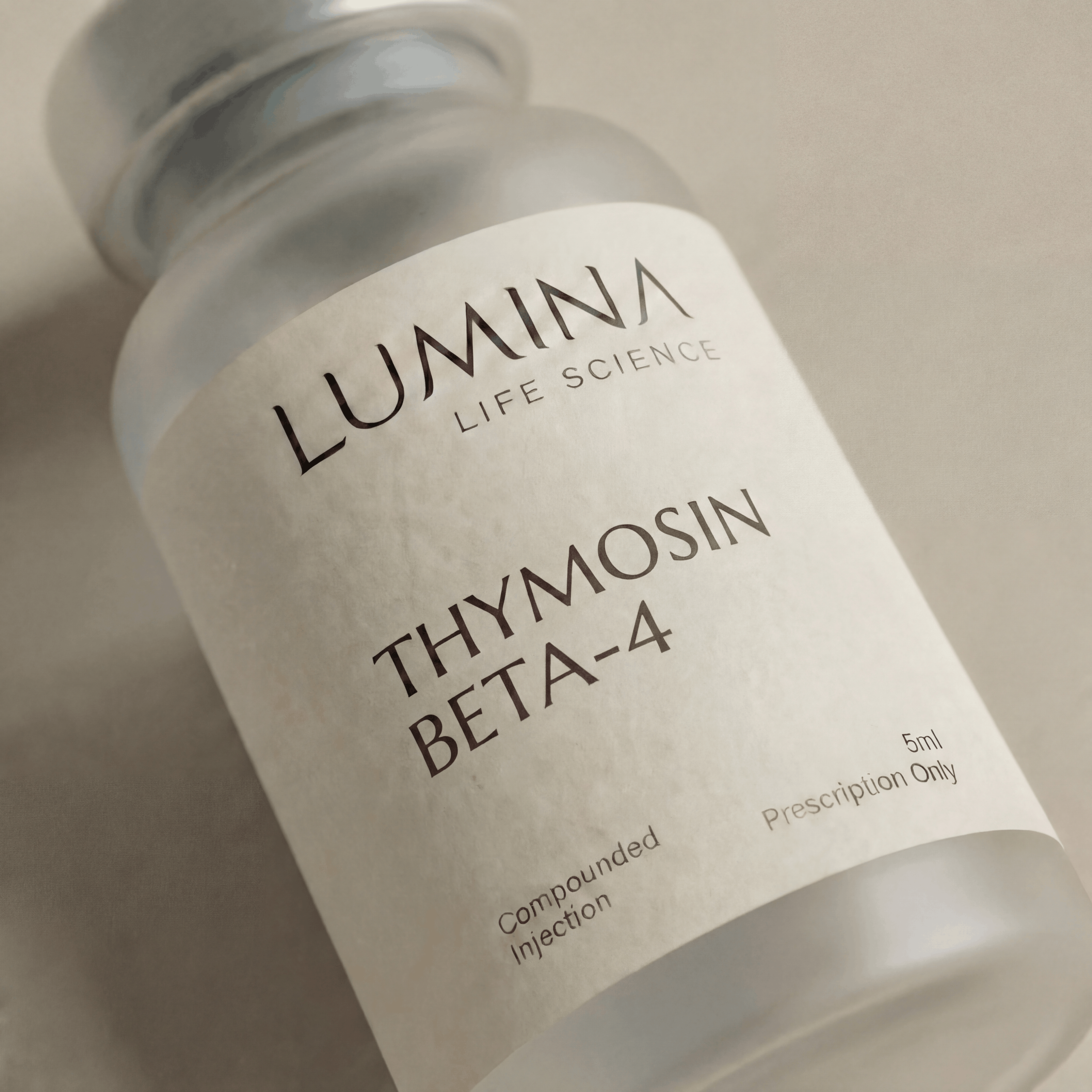
This product is a prescription item and a medical review is required for purchase.
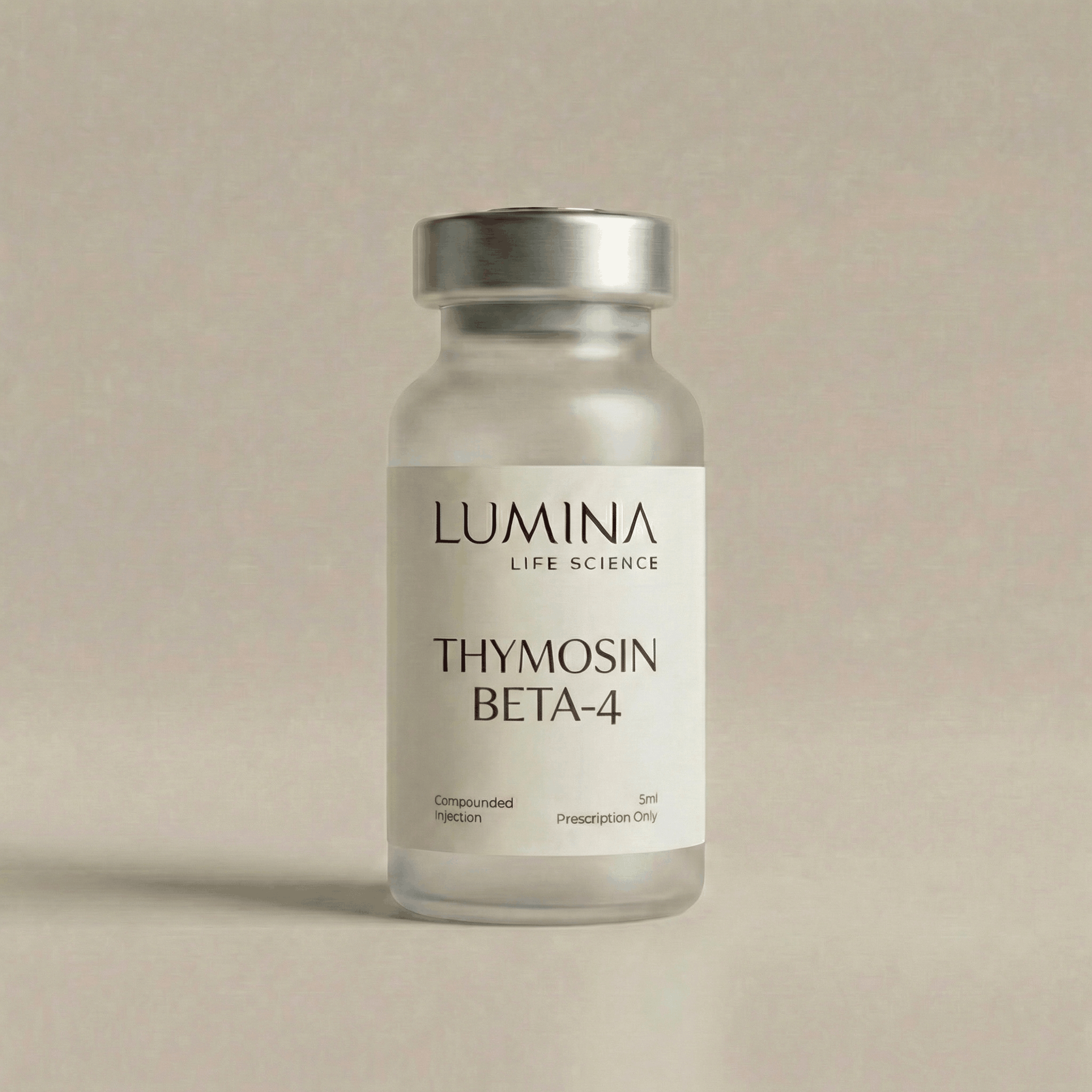
Thymosin Beta-4 (commonly known as TB-500) is a naturally derived repair-support peptide used in advanced wellness and performance programs to help the body cope with tissue stress, micro-injury and recovery demands. It is based on a peptide sequence found widely in the body, particularly in cells that are involved in repair and regeneration. In practice, TB-500 is chosen for its potential to support healing processes in muscle, fascia, tendons and other soft tissues, as well as for its broader role in cell migration, tissue remodelling and resilience.
Clients who use TB-500 under clinical supervision are usually dealing with high physical demands, ongoing training loads or a history of soft-tissue niggles and slow recovery. Rather than being a painkiller or a local anti-inflammatory injection, TB-500 is positioned as a systemic support tool that may help enhance the body’s own capacity to repair and remodel tissues over time. When paired with good rehab, strength work, mobility programming and adequate nutrition (especially protein and collagen-building nutrients), it can become one part of a more comprehensive strategy to keep people moving, training and functioning at a higher level.
It is not a substitute for proper diagnosis, imaging, surgery when required, deloading or structured rehabilitation. TB-500 should only be used under the guidance of a clinician who understands its role, risks and limitations, and who can ensure that any underlying structural problems, red-flag symptoms or medical issues are properly assessed and managed.
When used as directed and as part of a complete treatment and rehab plan, clients commonly use Thymosin Beta-4 (TB-500) to help support:
Soft-tissue healing and repair
TB-500 is often included in programs for muscle, tendon, fascia and ligament support, with the aim of helping the body repair micro-injuries and accumulated strain more effectively.
Recovery from training and physical load
Active people and athletes may use TB-500 to support recovery between sessions and training blocks, alongside proper programming, deloads and recovery strategies.
Mobility and function
By supporting soft-tissue quality and repair, TB-500 can be part of a plan to improve comfort with movement and maintain or regain functional range of motion.
Healthy-ageing of joints and connective tissues
TB-500 is sometimes used in longevity or active-ageing protocols to help support the tissues that keep people moving well as they get older.
Inflammation and fibrosis modulation (TB4 Frag aa 1–4)
The aa 1–4 fragment has been studied for its anti-inflammatory and anti-fibrotic signalling, and is used clinically to support more balanced tissue responses in recovery and healthy-ageing contexts.
Targeted repair, angiogenesis and hair / follicle support (TB4 Frag aa 17–23)
The aa 17–23 fragment (TB-500 region) is associated with enhanced cell migration, wound repair, vascular support and hair-follicle regeneration in research settings, and is therefore included where deeper tissue repair and regenerative goals are a focus.
*Individual results vary. TB-500 is not a stand-alone treatment for musculoskeletal injury, arthritis or any other condition, and should always be used alongside appropriate medical care, imaging and rehabilitation where indicated.
| UAE Made | Vegan Friendly | Gluten Free | Corn Free |
| Y | Y | Y | Y |
| Dairy Free | Soy Free | Shellfish Free | No Egg Products |
| Y | Y | Y | Y |
| Ingredient name | Description |
|---|---|
| Thymosin Beta 4 peptide | 3000mcg/mL |
| TB4 Frag (aa1-4) / TB4 Frag (aa 17-23) | 500mcg/250mcg |
Thymosin Beta-4 (TB-500) peptide – 3000 mcg/mL
Strength: 3000 mcg/mL
Volume: 5 mL multidose vial
Total peptide content per vial: 15,000 mcg (15 mg)
Sterile diluent (e.g., bacteriostatic saline) and standard compounding excipients as specified by the partner pharmacy (may include buffering agents and preservatives).
Strength per capsule:
TB4 Frag (aa 1–4): 500 mcg
TB4 Frag (aa 17–23): 250 mcg
Pack size:
60 capsules
Dose:
0.10–0.20 mL subcutaneous (SC) nightly
Frequency:
Once daily
Dose:
0.10 mL SC twice daily (BD – morning and evening)
Frequency:
Daily
At a concentration of 3000 mcg/mL:
0.10 mL ≈ 300 mcg
0.20 mL ≈ 600 mcg
Your clinician will decide which protocol (standard vs regenerative) is suitable based on your presentation, goals and overall health.
Route:
Subcutaneous injection into fatty tissue (e.g. lower abdomen, outer thigh) using a fine insulin syringe.
Timing:
Standard: once nightly (e.g. in the evening, same time each day).
Regenerative: morning and evening, roughly 12 hours apart, or as directed.
Technique:
Clean the area, pinch a fold of fat, inject as instructed by your nurse or clinician, rotate injection sites and use aseptic technique at all times.
Timing:
Often taken once or twice daily, with water, at the same times each day to maintain consistent levels, as directed.
With or without food: Your practitioner may recommend taking with food if you are prone to digestive sensitivity.
Administration Instructions
Swallow capsules whole with water; do not open, crush or chew unless your clinician advises otherwise.
Do not exceed the prescribed daily number of capsules, and do not share this medication with others.
Do not change your dose, frequency or protocol without discussing this with your prescribing clinician.
Use is generally not recommended in:
Common Side Effects and Adverse Reactions
Reactions Requiring Medical Attention – Stop injections and seek medical attention (or emergency care if severe) if you notice:
Safety Note
Safety Note: Long‑term data is limited. Use should always be monitored by a qualified clinician, with regular reviews and ongoing medical supervision. Informed consent is essential.

""In bodybuilding, we often focus so much on the stimulus (training) and the fuel (macros) that we neglect the most important variable: the recovery environment. After years of pushing my body to the limit, I hit a wall where my recovery couldn't keep up with my intensity. I started a controlled protocol of CJC-1295 (no DAC) + Ipamorelin, and the synergy was immediate. Unlike harsh alternatives that can cause massive water retention or lethargy, this combination felt 'clean' and highly effective.""